Best PET-CT Scan in Lucknow: A Complete Guide to PET-CT for Cancer Diagnosis, Staging & Treatment Planning
When cancer is suspected or diagnosed, accurate imaging can play an important role in understanding where the disease is located, how extensive it may be, and how it is responding to treatment. Among the advanced imaging techniques used in modern cancer care, PET-CT scanning combines functional and anatomical imaging in a single examination.
For patients searching for the Best PET-CT Scan in Lucknow, choosing a facility should involve more than comparing scan prices. The quality of the imaging equipment, availability of trained nuclear medicine and radiology specialists, appropriate patient preparation, image interpretation, reporting, and coordination with the treating cancer team are all important considerations.
Globe Healthcare, Lucknow, provides comprehensive cancer-care services within a multidisciplinary oncology environment. Its Comprehensive Cancer Care services include medical oncology, surgical oncology, radiation oncology, nuclear medicine, interventional radiology, pathology and other supporting specialties.
This makes PET-CT an important part of the broader cancer diagnostic and treatment-planning pathway for appropriately selected patients.
What Is a PET-CT Scan?
PET-CT stands for Positron Emission Tomography–Computed Tomography.
It combines two different imaging techniques:
- PET, which provides information about metabolic or biological activity in tissues
- CT, which provides detailed anatomical information about the body’s internal structures
When combined, the two techniques can provide complementary information.
A PET scan uses a small amount of a radioactive tracer to identify areas of increased or altered biological activity. A CT scan provides detailed anatomical images showing the location, size and structure of tissues and organs.
The combined PET-CT image can therefore help doctors determine where an abnormal area is located and how metabolically active it may be.
PET-CT is widely used in oncology, although it can also have applications in certain non-cancerous medical conditions.
Why Is PET-CT Important in Cancer Care?
Cancer cells can behave differently from normal cells in terms of metabolism.
Many cancers use glucose at a higher rate than surrounding normal tissues. One commonly used PET tracer is 18F-fluorodeoxyglucose (FDG), a glucose-related radioactive tracer.
After the tracer is administered, tissues that take up more of it can appear as areas of increased activity on the PET images.
When PET information is combined with CT anatomy, doctors can evaluate suspicious areas more precisely.
PET-CT may therefore help clinicians in situations such as:
- Detecting areas of abnormal metabolic activity
- Determining the extent of known cancer
- Looking for disease in other parts of the body
- Evaluating lymph-node involvement
- Detecting possible distant metastases
- Planning treatment
- Assessing response to treatment
- Investigating suspected recurrence in selected situations
However, PET-CT does not diagnose every cancer and does not replace biopsy when tissue diagnosis is required.
PET-CT for Cancer Staging
One of the most important uses of PET-CT in oncology is staging.
Cancer staging helps doctors determine the extent of disease.
Depending on the type of cancer, PET-CT may help identify:
- The primary tumor
- Nearby lymph-node involvement
- Distant lesions
- Possible metastatic disease
- Additional areas of disease that may not be obvious from symptoms or conventional imaging alone
Accurate staging can influence treatment decisions.
For example, the treatment plan for cancer confined to one area may differ significantly from the plan for cancer that has spread to distant organs.
The exact role of PET-CT depends on the cancer type and clinical situation.
PET-CT in Treatment Planning
PET-CT is not simply an imaging test performed after cancer has been diagnosed.
In appropriate cases, its findings can contribute to treatment planning.
A cancer team may use PET-CT findings when deciding between different approaches, such as:
- Surgery
- Radiation therapy
- Chemotherapy
- Immunotherapy
- Targeted therapy
- Combined treatment approaches
- Active surveillance in selected circumstances
For example, if imaging suggests disease beyond the area initially suspected, the treatment strategy may need to be reconsidered.
This is one reason PET-CT is often integrated into a multidisciplinary cancer-care pathway.
PET-CT for Monitoring Treatment Response
PET-CT may also be used in selected cancers to evaluate how a tumor responds to treatment.
A reduction in abnormal metabolic activity may provide information about treatment response.
Depending on the cancer type, doctors may compare PET-CT examinations performed at different points during treatment.
However, interpreting treatment response is complex.
Inflammation and other non-cancerous processes can sometimes show increased tracer uptake. Therefore, PET findings must be interpreted together with the patient’s history, physical examination, laboratory results and other imaging.
PET-CT for Detecting Cancer Recurrence
After cancer treatment, doctors may need to investigate whether disease has returned.
Depending on the cancer type and clinical circumstances, PET-CT may help evaluate suspicious symptoms, laboratory findings or abnormalities detected on other imaging.
Again, PET-CT findings are not automatically proof that cancer has returned.
An area of increased uptake can have several possible causes, including inflammation or infection.
The final interpretation should therefore be made by appropriately trained specialists in the context of the patient’s complete medical history.
What Is the Difference Between PET and CT?
Although PET and CT are combined into one examination, they provide different types of information.
CT Scan
CT primarily provides detailed anatomical information.
It can show:
- Size of a lesion
- Location of a mass
- Relationship to nearby structures
- Changes in organs and tissues
PET Scan
PET provides information about biological or metabolic activity using a radioactive tracer.
It can help identify tissues with increased tracer uptake.
PET-CT
PET-CT combines both forms of information.
This can help doctors determine:
“Where is the abnormality?”
and
“Is it showing increased metabolic activity?”
The combination can be particularly useful in selected cancer evaluations.
Which Cancers Can Be Evaluated With PET-CT?
PET-CT is used in many areas of oncology, but its usefulness varies according to cancer type and clinical circumstances.
It may be used in the evaluation of selected patients with cancers such as:
- Lymphoma
- Lung cancer
- Head and neck cancers
- Colorectal cancer
- Esophageal cancer
- Breast cancer in selected situations
- Melanoma
- Certain gynecological cancers
- Certain gastrointestinal cancers
- Other cancers where PET imaging is clinically appropriate
The most suitable tracer can also vary depending on the disease.
FDG PET-CT is widely used, but other radiotracers may be appropriate for specific clinical questions.
Therefore, the decision to perform PET-CT should be made by a qualified medical team based on the individual patient’s diagnosis and clinical requirement.
Who May Need a PET-CT Scan?
A doctor may recommend PET-CT when there is a specific clinical reason.
Examples include:
Newly Diagnosed Cancer
PET-CT may be recommended in selected cancers to evaluate the extent of disease after diagnosis.
Suspected Metastasis
If doctors need to determine whether cancer may have spread to other parts of the body, PET-CT may provide useful information.
Treatment Planning
PET-CT may help determine the extent of disease before surgery, radiation or systemic treatment in appropriate cases.
Monitoring Treatment
In selected cancers, PET-CT may help evaluate treatment response.
Suspected Recurrence
When cancer recurrence is suspected, PET-CT may help identify areas requiring further investigation.
Not every cancer patient requires PET-CT.
A PET-CT should be performed when the expected clinical information is likely to influence diagnosis or treatment.
How Is a PET-CT Scan Performed?
Although the exact protocol can vary between facilities, a typical FDG PET-CT examination follows several stages.
Step 1: Patient Preparation
The patient receives specific instructions before arriving.
These may include fasting for a prescribed period.
Patients are generally advised to avoid strenuous physical activity before an FDG PET examination because muscle activity can affect tracer distribution.
The imaging centre will provide specific instructions regarding food, fluids and medications.
Step 2: Blood Glucose Assessment
For FDG PET-CT, blood glucose may be checked before administration of the tracer.
This is particularly relevant because FDG behaves similarly to glucose.
Patients with diabetes may require special preparation.
Anyone with diabetes should inform the PET-CT team before the appointment and follow the facility’s specific instructions.
Step 3: Administration of the Tracer
A small amount of radioactive tracer is administered, usually through an intravenous injection.
The tracer used depends on the clinical purpose of the examination.
Step 4: Uptake Period
After tracer administration, the patient usually rests quietly for a period while the tracer distributes throughout the body.
The exact duration depends on the tracer and the examination protocol.
Patients may be asked to remain relaxed and avoid unnecessary movement during this period.
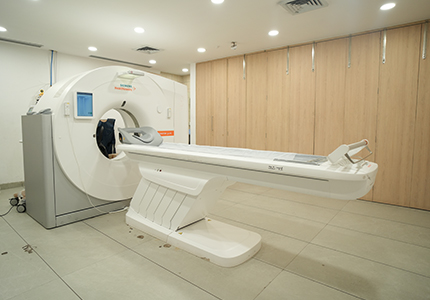
Step 5: PET-CT Imaging
The patient lies on the imaging table.
The table moves through the PET-CT scanner while the equipment acquires the required images.
The scan itself is generally painless.
It is important to remain still during image acquisition.
Step 6: Image Interpretation
The acquired PET and CT images are reconstructed and reviewed by appropriately trained specialists.
The findings are then incorporated into a medical report.
The report is interpreted in conjunction with the patient’s clinical history and previous investigations.
How Long Does a PET-CT Scan Take?
The total appointment can take considerably longer than the actual scanning time.
This is because the process may include:
- Registration and preparation
- Blood glucose testing where required
- Tracer administration
- Waiting period for tracer uptake
- Imaging
- Post-scan instructions
Patients should therefore plan sufficient time for the complete appointment.
The exact duration depends on the type of PET-CT examination and the facility’s protocol.
Is PET-CT Painful?
The PET-CT scan itself is generally painless.
The main physical discomfort may come from the intravenous injection used to administer the tracer.
Some patients may find it uncomfortable to remain still on the imaging table.
If intravenous contrast is used as part of the CT component, additional considerations may apply.
Patients should inform the medical team about previous contrast reactions or relevant medical conditions before the examination.
Is PET-CT Safe?
PET-CT involves exposure to radiation from both the radioactive tracer and the CT component.
The amount of radiation is carefully considered against the expected medical benefit.
For a medically indicated examination, trained healthcare professionals determine the appropriate protocol.
Patients should inform the medical team if they:
- Are pregnant
- May be pregnant
- Are breastfeeding
- Have diabetes
- Have kidney problems
- Have experienced contrast reactions
- Have other relevant medical conditions
The PET-CT team can then determine the appropriate preparation and imaging protocol.
PET-CT and Pregnancy
Patients who are pregnant or may be pregnant should inform the PET-CT team before the examination.
Because PET-CT involves ionizing radiation, the healthcare team needs to assess whether the examination is necessary and whether modifications or alternative imaging would be appropriate.
Pregnancy should never be hidden from the imaging team.
PET-CT and Diabetes
Patients with diabetes may require specific preparation before an FDG PET-CT scan because blood glucose levels can affect the distribution and interpretation of FDG.
Diabetic patients should inform the imaging centre when scheduling the examination.
The PET-CT team may provide individualized instructions concerning:
- Fasting
- Medication
- Insulin
- Meal timing
- Blood glucose levels
Patients should not independently stop diabetes medication unless specifically instructed by their treating healthcare professional.
What Should You Do Before a PET-CT Scan?
The exact preparation instructions should come from the PET-CT centre.
Common instructions may include:
- Follow the prescribed fasting period
- Drink water as instructed
- Avoid strenuous physical activity before the scan
- Take medicines only as directed
- Inform the centre about diabetes
- Inform the centre about pregnancy or possible pregnancy
- Bring previous reports and scans when requested
- Wear comfortable clothing
Following preparation instructions carefully can help obtain better-quality images.
What Should You Bring for Your PET-CT Appointment?
Depending on the centre’s requirements, patients may be asked to bring:
- Previous CT/MRI/PET reports
- Biopsy or pathology reports
- Doctor’s prescription or referral
- Previous treatment records
- Medication details
- Blood glucose reports where relevant
- Identification and registration documents
Previous imaging can be particularly useful because doctors may compare the new PET-CT with earlier examinations.
What Happens After a PET-CT Scan?
After the scan, patients are generally given instructions based on the tracer and protocol used.
The radioactive tracer naturally loses activity over time and is eliminated from the body.
Patients may be advised to drink adequate fluids unless their doctor has restricted fluid intake.
The imaging team will provide any specific radiation-safety instructions that apply to the individual examination.
How Accurate Is PET-CT?
PET-CT can provide valuable information, but no imaging test is 100% accurate.
Some cancers may show low tracer uptake.
Some non-cancerous conditions, including inflammation and infection, may show increased uptake.
Small lesions may also be difficult to characterize.
Therefore, PET-CT findings should be interpreted in the context of:
- Symptoms
- Clinical examination
- Blood tests
- Biopsy
- CT or MRI findings
- Previous scans
- Treatment history
A suspicious PET-CT finding does not automatically mean cancer.
Similarly, a negative PET-CT does not necessarily exclude every microscopic or low-metabolism cancer.
Does PET-CT Replace Biopsy?
Usually, no.
A biopsy involves taking a tissue sample that can be examined by a pathologist.
For many cancers, biopsy provides the definitive tissue diagnosis and helps determine the specific type and characteristics of the cancer.
PET-CT provides imaging information.
The two investigations serve different purposes and may be used together.
PET-CT vs MRI
PET-CT and MRI are different imaging techniques.
PET-CT
Provides metabolic information together with CT anatomy.
It is widely used in selected cancer staging and treatment-evaluation situations.
MRI
Provides excellent soft-tissue imaging and is particularly useful for specific organs and anatomical regions.
For example, MRI may be particularly valuable for evaluating the brain, spine, pelvis and certain soft-tissue structures.
Doctors may recommend PET-CT, MRI, CT or a combination depending on the clinical question.
PET-CT vs CT Scan
A conventional CT scan primarily provides anatomical information.
PET-CT adds metabolic information from PET imaging.
For some clinical situations, CT alone may be sufficient.
For others, PET-CT can provide additional information that may influence cancer staging or treatment planning.
The appropriate examination depends on the individual patient.
What Makes a Good PET-CT Centre in Lucknow?
Patients searching online for the Best PET-CT Scan in Lucknow should consider several factors rather than choosing solely on price.
1. Appropriate PET-CT Technology
The imaging system should be suitable for the clinical applications being offered.
2. Qualified Specialists
PET-CT interpretation requires appropriate expertise in nuclear medicine and radiological imaging.
3. Proper Patient Preparation
Accurate PET imaging depends partly on appropriate preparation and tracer administration.
4. Quality Reporting
The report should provide clinically meaningful information and be correlated with the patient’s medical history.
5. Oncology Integration
For cancer patients, PET-CT findings may need to be discussed with surgeons, medical oncologists and radiation oncologists.
6. Radiation Safety
Appropriate handling of radioactive tracers and radiation-safety procedures are essential.
7. Follow-Up Support
Patients benefit when imaging results can be incorporated into the wider diagnostic and treatment pathway.
PET-CT Scan in Lucknow at Globe Healthcare
For patients looking for PET-CT Scan in Lucknow, Globe Healthcare offers access to advanced cancer-care services within a multidisciplinary healthcare environment.
Its Comprehensive Cancer Care program includes nuclear medicine, medical oncology, surgical oncology, radiation oncology, interventional radiology, pathology and other cancer-related specialties.
This multidisciplinary structure allows imaging to be considered as part of the broader cancer-care process rather than as an isolated diagnostic test.
For cancer patients, PET-CT results may be reviewed alongside pathology, CT, MRI and other investigations to help doctors develop an individualized treatment plan.
Why PET-CT Is Important in a Comprehensive Cancer Centre
Cancer imaging does not exist independently from cancer treatment.
A PET-CT finding may influence:
- Whether surgery is considered
- The extent of surgery
- Whether radiation therapy is recommended
- Radiation treatment planning
- Selection of systemic therapy
- Evaluation of treatment response
- Investigation of possible recurrence
This is why access to specialists from multiple disciplines can be valuable.
At Globe Healthcare, cancer care is organized around multiple oncology specialties and supporting medical services.
How to Choose the Best PET-CT Scan in Lucknow
If you are searching for the best PET-CT scan in Lucknow, consider asking the diagnostic centre:
- What type of PET-CT examination has been recommended?
- Which tracer will be used?
- What preparation is required?
- Do I need to fast?
- What should diabetic patients do?
- How long will the complete appointment take?
- Who will interpret the scan?
- When will the report be available?
- Should I bring previous scans?
- What should I do after the examination?
- Is contrast-enhanced CT required in my case?
- What information will the scan provide for my treatment plan?
These questions can help patients make an informed choice.
When Should You Consult a Doctor Before Booking a PET-CT?
PET-CT should generally be performed based on a clinical indication.
If you are considering a PET-CT simply because you are concerned about cancer, it is better to consult a qualified physician first.
The doctor can determine whether PET-CT is appropriate or whether another test, such as ultrasound, CT, MRI, endoscopy or biopsy, would be more suitable.
Unnecessary imaging can increase cost and radiation exposure without providing useful clinical information.
Frequently Asked Questions About PET-CT Scan in Lucknow
What is a PET-CT scan?
PET-CT is an advanced imaging examination that combines Positron Emission Tomography with Computed Tomography to provide information about tissue activity and anatomy.
Why is PET-CT used in cancer?
PET-CT can help evaluate selected cancers for staging, treatment planning, treatment response and suspected recurrence.
Is PET-CT the same as a CT scan?
No. CT provides anatomical information, while PET provides metabolic information. PET-CT combines both.
Is PET-CT painful?
The imaging itself is generally painless. A patient may experience brief discomfort from the intravenous tracer injection.
Does PET-CT detect all cancers?
No. PET-CT is not equally useful for every type of cancer, and some cancers may show limited tracer uptake.
Does PET-CT confirm cancer?
Not necessarily. Increased tracer uptake can occur in cancer as well as some non-cancerous conditions such as inflammation or infection. Biopsy may be required for diagnosis.
Can PET-CT detect cancer spread?
In selected cancers, PET-CT can help identify areas of disease outside the primary tumor and can contribute to staging.
How long does PET-CT take?
The entire appointment can take several hours because it includes preparation, tracer administration, an uptake period and imaging. The exact duration varies.
Can diabetic patients undergo PET-CT?
Yes, but special preparation may be required because blood glucose can affect FDG PET imaging. Diabetic patients should inform the PET-CT centre in advance.
Can PET-CT be performed during pregnancy?
Pregnancy or possible pregnancy should be disclosed before the examination because PET-CT involves ionizing radiation. The medical team will assess the necessity of the scan.
Should I bring my previous reports?
Yes. Previous scans, pathology reports and treatment records can be useful for comparison and interpretation.
Is PET-CT safe?
When medically indicated and performed using appropriate protocols, PET-CT is routinely used in clinical practice. However, it involves exposure to ionizing radiation, so the examination should have an appropriate medical indication.
Conclusion
A PET-CT scan can provide valuable information in the diagnosis, staging and management of selected cancers by combining metabolic imaging with detailed anatomical information.
For patients searching for the Best PET-CT Scan in Lucknow, the decision should go beyond cost or equipment alone.
Important factors include appropriate technology, qualified specialists, accurate reporting, patient preparation, radiation safety and integration with the patient’s overall medical and cancer-treatment plan.
At Globe Healthcare, Lucknow, PET-CT and nuclear medicine services form part of a broader multidisciplinary cancer-care environment involving surgical oncology, medical oncology, radiation oncology, pathology, interventional radiology and other specialties.
If your doctor has recommended a PET-CT, discuss the reason for the examination, the expected information, preparation requirements and how the results will influence your treatment plan.
The value of a PET-CT scan is not simply in producing images—it is in providing clinically useful information that can help the medical team make informed decisions about the patient’s care.
Medical Disclaimer
This article is provided for general educational purposes and should not be considered a substitute for medical diagnosis or professional medical advice. PET-CT may not be appropriate for every patient or every type of cancer. The need for PET-CT, the appropriate tracer and the imaging protocol should be determined by a qualified healthcare professional based on the patient’s individual clinical condition.